

Why Now?
Urgency Accelerated by the rise of AI
Back when the world was bracing for Y2K, I was on the ground helping fix code that kept critical systems running. It was my first real glimpse into how fragile our digital foundations could be—and how dependent businesses had already become on technology.
Then came the dot-com boom, and just as quickly, the bust. Many startups disappeared overnight, but the lesson endured: business models matter more than hype.
The 2000s were about being small, nimble, and global. That energy blossomed into the SaaS economy. Salesforce proved software could be delivered as a service. Amazon and AWS showed us infrastructure could scale elastically and power a new generation of businesses.
The iPhone brought the mobile economy. Suddenly entire industries—from transportation to hospitality—were reshaped. Uber and Airbnb were no longer just apps; they became verbs.
By the late 2010s, SaaS 2.0 had taken hold. Workday, ServiceNow, and others proved enterprise software could reinvent entire business functions.
Then COVID changed everything. Remote work wasn’t an experiment—it was a necessity. Leaders scrambled for tools and techniques to keep organizations connected, but the human fabric of work was stretched thin.
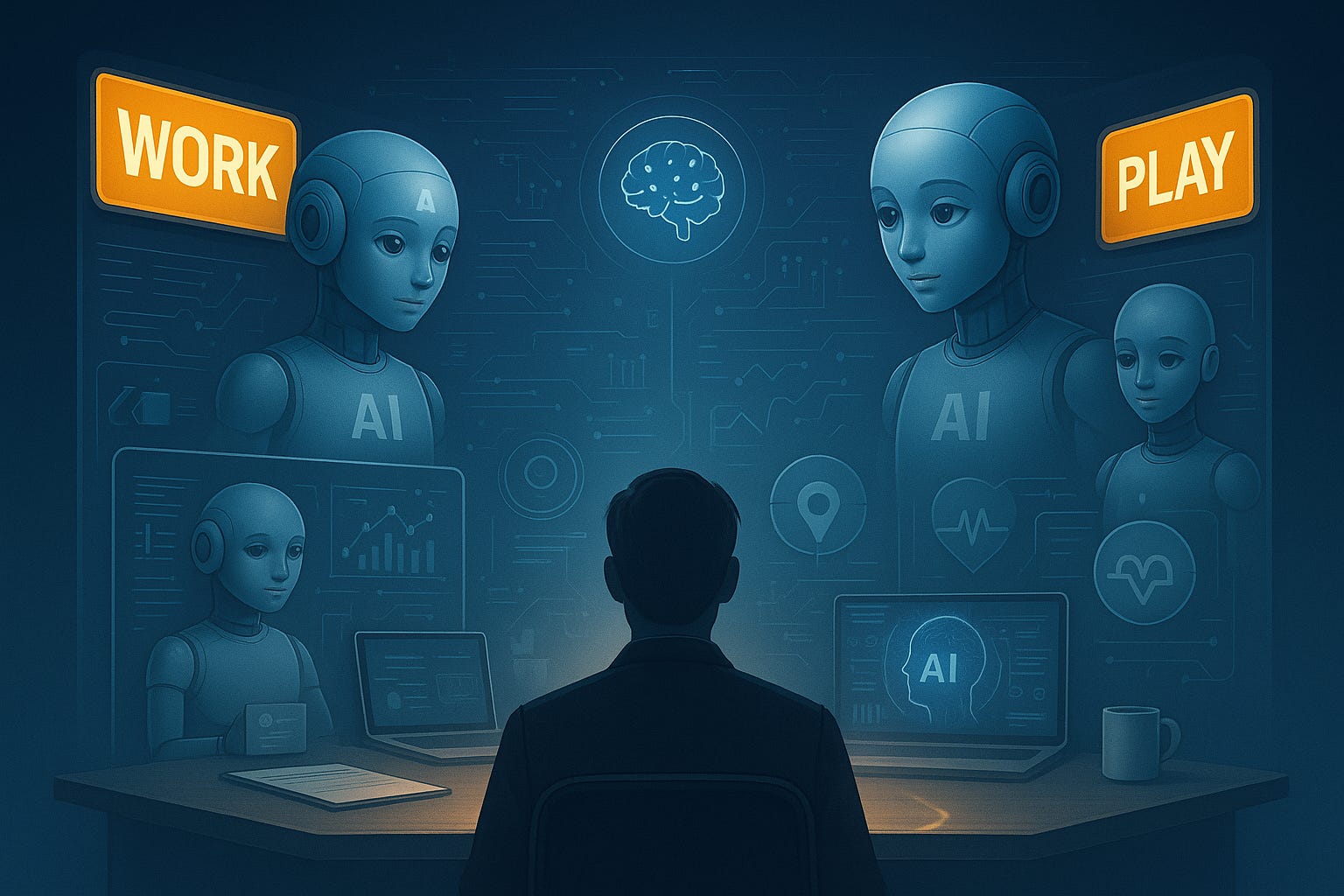
And now, AI is here. Innovation is happening at breathtaking speed, but so are risks: bias, misinformation, and the sheer overwhelm of too much automation too fast.
Over the past two decades, I’ve had the privilege of serving global organizations through all these shifts—observing from the heart of Silicon Valley while working with clients across India, Europe, and the U.S. I’ve never been enamored by technology for its own sake. Instead, I’ve stayed skeptically optimistic: fully invested in the promise of innovation, but clear-eyed about its limits.
That perspective has taught me one thing:
The choices executives make in the next 24 months will determine whether technology becomes a competitive advantage—or just another sunk cost.
This publication is about that moment. Not theory, but clarity. Not hype, but lessons that travel.
What’s Coming Next
Over the next few weeks, I’ll be writing about:
The trust deficit in business: why customer complaints are rising despite more technology than ever.
The AI paradox: how the same tools that overwhelm customers can be used to win them back.
Lessons from the field: stories from two decades in consulting and tech, where global teams and new business models succeeded—or failed.
Building across borders: what I’ve learned from working with teams and clients in India, Europe, and the U.S.
The road ahead: ideas that could become frameworks, products, or even open-source solutions depending on where the traction is.
I don’t have all the answers. But I’ve seen enough patterns to know what’s worth watching—and what isn’t.
If you’re navigating change, I invite you to follow along, share your perspective, and challenge mine.